

As a writer, I have just begun.
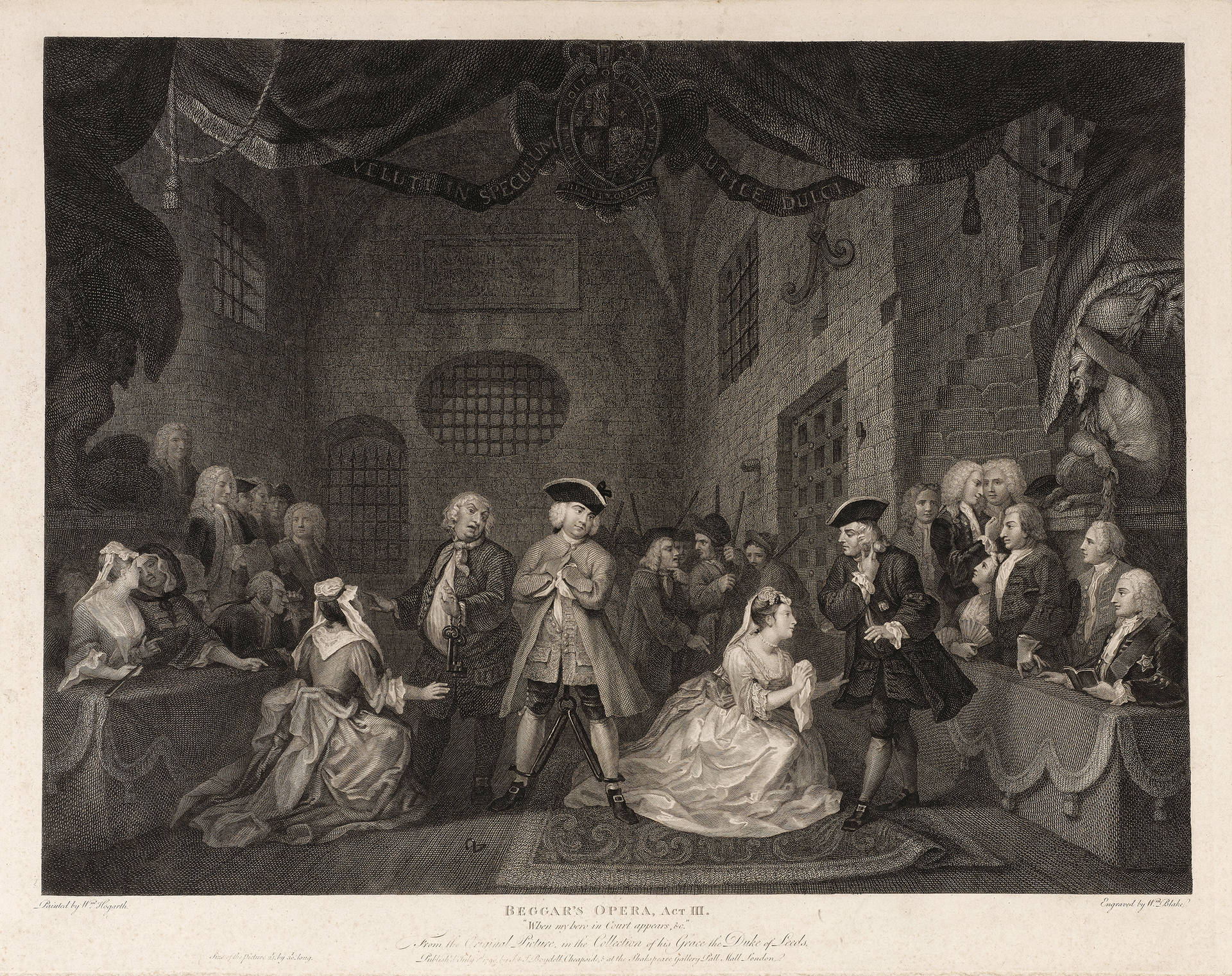
The Beggar’s Opera, engraving by William Blake after art by William Hogarth, from the Victoria & Albert Museum, https://www.vam.ac.uk/articles/the-story-of-theatre
I keep telling myself that, and it is feeling true, even real. I may have a couple of books behind me, but I’m fairly sure I have a lot more ahead of me. I retired from my full-time professorship after forty-three years of teaching (less six years of writing for a living), thirty of those at one upstate college I have loved very much. So now I’m on a new phase of writing, and while my nervous system is taking the fall off to recover from its natural oversupply of cortisol which makes it challenging to sleep and challenging to rise, what no longer eludes me is the motivation to write. And for that I deeply grateful.
Yet I’m haunted by a long, ongoing project.
There are new projects: a workshop here, a proposed continuing education course for spring, and my own writing, including new poems and poems in need of revision. But what haunts me is my pet project for the next year (or more), a full-length musical theatre play, on which I am honored to collaborate with a top-notch, award-winning composer. My lyrics are getting there, slowly, and I cannot wait to hear the music my collaborator will create, because the music she’s created in the past is first-rate.
The musical theatre play that haunts me began as a brief two-act play that I drafted quickly in the spring of 1982 when I was a fresh college grad waiting for May when I would graduate officially, and for a late-spring/early summer job to commence. I had finished courses a semester early and was delighted to plop on my bed in my parents’ farmhouse every day, listening to the mice scratching in the walls as I penned my script with youthful fervor.
I’m not ready to share broadly the subject, but suffice it to say I was worried about permissions acquisitions when legal had to go through Beirut, which was being bombed in 1982. In fact, Beirut seemed to be under attack every few years when I returned to the project with renewed interest and a growing sense of imposter syndrome. Sure, I’d spent plenty of time on stage during college and graduate school, and I’d taken modern drama and Shakespeare courses, but I’d never studied playwriting, much less songwriting. Then, in the past decade when my dreams started telling me the script wanted to be a musical, I nearly sprang the proverbial gasket. But I was fortunate to be buoyed by my writers’ group, encouraged to stay the course and see the project to completion.
Since I settled on the form and found a composer, things have been proceeding apace. Yes, I need to write many more songs and make changes, and I also need deletions and discoveries to occur during this scripting process. My fingers are crossed for a grant for us as a team to help support this endeavor.
I think of my legacy, of how I need to write to leave something worthwhile behind me (besides students who learned a bit about writing). I think of writers like Christian Bök, the experimental Canadian poet who, a decade ago, published Xenotype, Book 1, the first part of his long-term project to encode a bacterium with his poetry. Together with chemical engineer Lydia Contreras from the University of Texas at Austin, he has now succeeded in encoding his work into Deinococcus radiodurans, a bacterium so hardy it is nicknamed Conan the Bacterium. This DNA-encoded bacterium has now been engineered to generate an RNA response poem written by the bacterium. Talk about a legacy.
By contrast, I’ll be happy if my poems reach a few more readers in the coming years, and my stage piece makes it to the stage. And, of course, in the process, I expect to grow and keep growing. I’d really like to surprise myself.
Now, I’m in it for the long haul. After forty-three years of cogitating on a piece, I cannot let it go until it’s dressed and ready to leave on its own. Theatre does that; it engenders a response. Poetry does too.
For now, I’m inspired by poets like Christian Bök and also by Barbara Ungar, who writes compellingly about the plight of the earth, our responsibility for its longevity, and our own mortality. The following poem excerpted from Save Our Ship celebrates aging as its own reward. Under the title of each poem in her collection is Morse Code. Save Our Ship features blurbs by Mark Jarman and Bernadette Mayer, who wrote, “If poetry sends signals out into the universe, and aliens could intercept and interpret these poems as code, they might answer,
Read poetry
Save yourselves
Buy this book.”
I couldn’t agree more. And as a survivor of three joint replacements, I revel in the genuineness of Ungar’s positivity in “How the Light Gets In.” Save Our Ship won the 2018 Richard Snyder Memorial Publication Prize.
How the Light Gets In
.__.. .__.. .__.. .__.. .__..
Don’t call it your bad hip—
recall the Japanese art of kintsugi
and be the cracked vessel
patched with gold.
Don’t wince when it squeaks
but thank the bright steel
cupping your pelvis
and capping your thigh.
Don’t be shamed by the scar—
you’ve wrestled till day break
with man and god, and managed
to limp away blessed.
~~~Barbara Ungar

 The Real McCoy
Leave a comment